
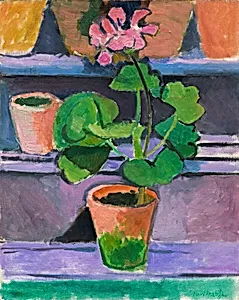
Pot of Geraniums
1912
Medium
oil on linen
Dimensions
overall: 41.3 x 33.3 cm (16 1/4 x 13 1/8 in.) framed: 55.8 x 48.2 cm (21 15/16 x 19 in.)
Classification
Painting
Department
CMC
Museum
National Gallery of Art, Washington, D.C.
Credit
Chester Dale Collection
Accession Number
1963.10.41
Rights
Public Domain
Art Historical Context
Henri Matisse's *Pot of Geraniums (1912) captures the vibrant essence of Fauvism, the bold color-driven movement Matisse helped pioneer a decade earlier. This intimate oil on linen painting, measuring just 41.3 x 33.3 cm, depicts a windowsill still life: a pot of vivid red geraniums against a patterned backdrop, bathed in luminous light. Painted during Matisse's mature Paris period, it reflects his lifelong fascination with everyday motifs transformed throughstrained color and flattened forms, prioritizing emotional impact over realistic representation. The artwork's artistic significance lies in Matisse's masterful use of oil on linen, a durable support that allowed his loose, expressive brushstrokes to build intense hues and dynamic patterns. Geraniums, a recurring subject for the artist, symbolize joy and vitality, echoing his belief in art's power to uplift. By 1912, Matisse had evolved beyond early Fauvist shock value toward harmonious compositions that influenced modern abstraction. Now part of the Chester Dale Collection at the National Gallery of Art, this gem invites visitors to savor its cheerful energy up close—perfect for contemplating how a modest flower pot can bloom into visual poetry.
About the Artist
Henri Matisse · 1869–1954
Henri Matisse (1869-1954) was a French painter, draughtsman, printmaker, and sculptor who is widely regarded as one of the most influential artists of the 20th century and the greatest colorist of his era. Born in Le Cateau-Cambresis in northern France, Matisse initially studied law before discovering his passion for art during a period of convalescence at age 20. He became the leading figure of F...