
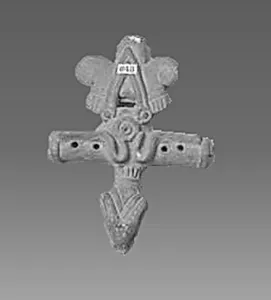
Pottery Flute
Unknown Artist
19th century
Medium
clay
Dimensions
L. 170 mm.; W. 127 mm.; Thickness (greatest) 39 mm.; Wt. 39 mm.
Classification
Aerophone-Whistle Flute-recorder
Culture
Mexican
Department
Musical Instruments
Museum
Metropolitan Museum of Art, New York, NY
Credit
The Crosby Brown Collection of Musical Instruments, 1889
Accession Number
89.4.643
Rights
Public Domain
Art Historical Context
This charming **Pottery Flute**, by an unknown Mexican artist in the 19th century, exemplifies the ingenuity of vernacular music-making in everyday materials. Fashioned from clay, it measures 170 mm in length, 127 mm width, and up to 39 mm thick, with a lightweight 39 g form that suggests portability for communal gatherings or personal play. Classified as an aerophone— a whistle flute or recorder instrument produces sound through air vibration across an embouchure hole, blending pottery craftsmanship with acoustic design. In Mexican culture, clay instruments like this one highlight a deep-rooted tradition of ceramic artistry, where potters doubled as instrument makers. Dating to the 19th century, it likely served in folk music, rituals, or celebrations, reflecting the era's blend of indigenous techniques and colonial influences. The flute's simple, hand-formed construction underscores the artistic significance of functional objects, turning humble clay into vessels of melody. Acquired as part of The Crosby Brown Collection of Musical Instruments in 1889, this piece now resides in the Metropolitan Museum of Art's Department of Musical Instruments. It invites visitors to appreciate how sound and sculpture intertwine, offering a tangible link to Mexico's vibrant sonic heritage.