
Pottery Whistle
Unknown Artist
ca. 800–1100
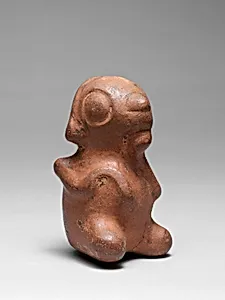
Medium
Clay
Dimensions
H. 105 mm.; W. 58 mm.; D. 65 mm.; Wt. 219 g.
Classification
Aerophone-Whistle Flute-whistle
Culture & Period
Costa Rican · Pre-Columbian
Department
Musical Instruments
Museum
Metropolitan Museum of Art, New York, NY
Credit
The Crosby Brown Collection of Musical Instruments, 1889
Accession Number
89.4.3168
Rights
Public Domain
Tags
Art Historical Context
This charming Pottery Whistle, crafted from clay by an unknown Costa Rican artist around 800–1100 AD, exemplifies the ingenuity of Pre-Columbian artisans. Standing just 105 mm tall, with a width of 58 mm and of 65 mm, this lightweight aerophone (weighing only 219 g) doubles as both a musical instrument and a sculptural. Its animal-inspired design—hinted at by thematic tags—reflects the zoomorphic motifs common in Costa Rican ceramics, where everyday objects blended functionality with symbolic artistry. In Pre-Columbian Costa Rica, such whistles were likely used in rituals, ceremonies, or daily life, producing distinctive tones when blown. Made from molded and fired clay, the piece showcases skilled hand-building techniques that ensured durability and resonance. These artifacts highlight a vibrant indigenous culture that valued sound as a bridge to the spiritual world, often embodying animals revered for their qualities like strength or agility. Today, this whistle resides in the Metropolitan Museum of Art's Crosby Brown Collection of Musical Instruments, acquired in 1889. It invites visitors to ponder the harmonious fusion of music, nature, and craftsmanship in ancient Americas, reminding us how a simple clay form could once fill the air with evocative melodies.