
Pouch
Unknown Artist
1820–30
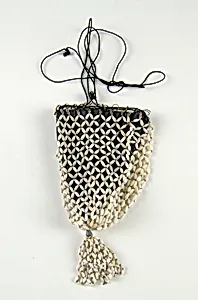
Medium
Silk, shell, metal
Classification
Pouch
Culture
American
Department
Costume Institute
Museum
Metropolitan Museum of Art, New York, NY
Credit
Brooklyn Museum Costume Collection at The Metropolitan Museum of Art, Gift of the Brooklyn Museum, 2009; Gift of J. Townsend Russell, 1959
Accession Number
2009.300.5071
Rights
Public Domain
Art Historical Context
This delicate pouch, crafted around 1820–30 by an unknown American artist, exemplifies early 19th-century fashion accessories from the Costume Institute at The Metropolitan Museum of Art. Made from luxurious silk adorned with shell and metal elements, it likely served as a reticule—a small, drawstring handbag popular among women after the introduction of slimmer gown silhouettes that eliminated built-in pockets. The combination of materials highlights skilled handcraftsmanship: silk provided elegance and durability, while shell and metal added ornamental flair, possibly in the form of beads, clasps, or embroidery accents. In the context of American culture during the 1820s, such pouches were essential for carrying personal items like handkerchiefs, coins, or sewing tools, reflecting the era's blend of practicality and refinement. This piece, part of the Brooklyn Museum Costume Collection (gifted to the Met in 2009 via J. Townsend Russell in 1959), offers a glimpse into everyday elegance amid the young nation's growing textile industry and European-influenced styles. Its preservation underscores the cultural importance of fashion artifacts in documenting social history, inviting us to imagine the hands that fashioned and carried it through bustling streets of antebellum America.