
Pouch
Unknown Artist
fourth quarter 17th century
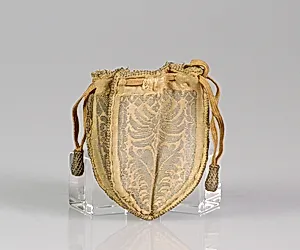
Medium
Silk, metallic
Classification
Pouch
Culture
European
Department
Costume Institute
Museum
Metropolitan Museum of Art, New York, NY
Credit
Brooklyn Museum Costume Collection at The Metropolitan Museum of Art, Gift of the Brooklyn Museum, 2009; Gift of the executors of the estate of Clara M. Blum in memory of Mr. and Mrs. Albert Blum, 1966
Accession Number
2009.300.5470
Rights
Public Domain
Art Historical Context
This delicate pouch, crafted by an unknown European artist in the late 17th century, exemplifies the opulent fashion accessories of the Baroque era. Produced during a time when European courts reveled in lavish display—think Versailles under Louis XIV or the restored splendor of Charles II's England—such pouches served as practical yet elegant carriers for coins, keys, or personal items. Worn at the waist or carried by hand, they were status symbols for both men and women, blending functionality with conspicuous luxury. Made from shimmering silk woven with metallic threads, likely gold or silver, the pouch highlights advanced textile techniques of the period. Silk, imported from Asia and prized for its luster, was often embellished with intricate embroidery or brocading to catch the light, evoking wealth and refinement. These materials not only ensured durability but also allowed for artistic expression through pattern and sheen, reflecting the era's fascination with ornamentation. Preserved in the Metropolitan Museum of Art's Costume Institute from the Brooklyn Museum collection, this pouch offers a tangible glimpse into 17th-century daily life and sartorial artistry. Its survival underscores the enduring value of costume artifacts in understanding social history and craftsmanship. (198 words)