
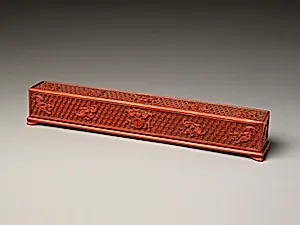
清乾隆 剔紅蝙蝠紋筆盒|Presentation box for a brush
Unknown Artist
Medium
Carved red lacquer
Dimensions
Box (bottom): H. 1 1/2 in. (3.8 cm); W. 1 3/4 in. (4.4 cm); L. 12 3/8 in. (31.4 cm) Lid: H. 9/16 in. (1.4 cm); W. 1 1/2 in. (3.8 cm); L. 12 1/8 in. (30.8 cm) Box closed: H. 2 in. (5.1 cm)
Classification
Lacquer
Culture & Period
China · Qing dynasty (1644–1911), Qianlong period (1736–95)
Department
Asian Art
Museum
Metropolitan Museum of Art, New York, NY
Credit
Gift of A. W. Bahr, 1958
Accession Number
58.64.19c, d
Rights
Public Domain
Tags
Art Historical Context
This exquisite carved red lacquer presentation box for a brush was created during China’s Qing dynasty, specifically in the Qianlong period (1736–95), a time renowned for imperial patronage of the decorative arts. The elongated form, designed to hold a scholar’s writing brush, reflects the high value placed on calligraphy and literati culture in eighteenth-century China. Its surface features intricately carved bats—a motif whose name, *fu*, is a homophone for “good fortune”—symbolizing wishes for happiness and prosperity. The medium of *tihong*, or carved red lacquer, involves applying dozens of thin layers of lacquer derived from tree sap before skilled artisans carve through the surface to reveal the design. This labor-intensive technique reached new heights of refinement under Qianlong court workshops, where such objects often served as prestigious gifts or personal treasures for the educated elite. The deep red color and crisp relief work highlight both technical mastery and auspicious symbolism. Housed today in the Metropolitan Museum of Art’s Asian Art collection, this modest yet elegant box offers visitors a glimpse into the refined material world of Qing scholars. Its understated scale and precise craftsmanship embody the period’s blend of functionality, beauty, and cultural meaning.