
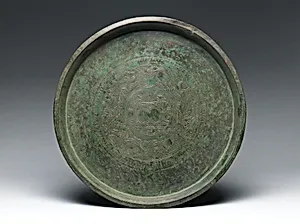
Priest's Offering Tray (Talam)
Unknown Artist
ca. 10th century
Medium
Copper
Dimensions
Diam. 22 11/32 in. (56.8 cm)
Classification
Metalwork
Culture & Period
Indonesia · Central or Eastern Javanese period
Department
Asian Art
Museum
Metropolitan Museum of Art, New York, NY
Credit
Samuel Eilenberg Collection, Bequest of Samuel Eilenberg, 1998
Accession Number
2000.284.35
Rights
Public Domain
Art Historical Context
This exquisite *Priest's Offering TrayTalam)*, crafted from copper around the 10th century Indonesia's Central or Eastern Jese period, served a vital role in Hindu-Buddhist rituals. Measuring an impressive 22 11/32 inches (56.8 cm) in diameter, this metalwork piece was likely used by priests to present offerings—such as flowers, incense, or food—to deities in temple ceremonies. Javanese art from this era flourished under powerful kingdoms like the Sailendra and Mataram dynasties, blending Indian influences with local ingenuity, and such trays symbolized devotion and communal piety. The choice of copper as a medium underscores its practicality and prestige: durable yet malleable, it allowed artisans to create finely wrought surfaces through techniques like repoussé hammering or chasing, ensuring the tray's longevity for repeated sacred use. Though the artist remains unknown, the tray's craftsmanship reflects the sophisticated metalworking traditions of ancient Java, where ritual objects bridged the earthly and divine realms. Today, this artifact from the Samuel Eilenberg Collection graces the Metropolitan Museum of Art's Asian Art department, offering visitors a tangible link to Indonesia's spiritual heritage and the artistry of a bygone era.