
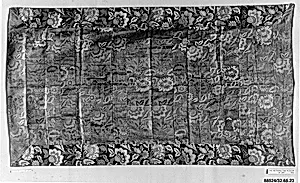
Priest's Robe
Unknown Artist
19th century
Medium
Silk
Dimensions
46 x 82 in. (116.84 x 208.28 cm)
Classification
Textiles-Costumes
Culture
Japan
Department
Asian Art
Museum
Metropolitan Museum of Art, New York, NY
Credit
Gift of E. G. Kennedy, 1932
Accession Number
32.65.23
Rights
Public Domain
Art Historical Context
This elegant *Priest's Robe* from 19th-century Japan, crafted from luxurious silk, offers a glimpse into the refined world of Japanese religious attire. an impressive 46 x 82 inches (116.84 x 208.28 cm), its generous proportions allowed it to drape gracefully over the wearer's form during ceremonies, embodying both practicality and spiritual symbolism. Now housed in the Metropolitan Museum of Art's Asian Art Department as a gift from E.. Kennedy in 1932, this textile-costume highlights the Met's commitment to preserving Asian cultural treasures. Silk, a prized medium in Japanese artistry, was laboriously produced and woven, prized for its shimmering luster and durability—qualities essential for garments meant to endure rituals and seasons. In 19th-century Japan, during a time of social transition from the Edo period to the modern Meiji era, such robes signified the priest's sacred role, likely in Buddhist or Shinto practices, where textiles served as visual expressions of devotion and hierarchy. Though the artist remains unknown, the robe's creation reflects masterful textile techniques honed over centuries, underscoring Japan's legacy of exquisite craftsmanship. Visitors are invited to appreciate its tactile beauty and the quiet reverence it evokes, connecting us to the spiritual lives of a bygone era.