
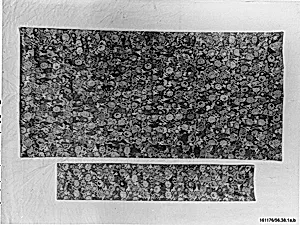
Priest's Robe and Stole
Unknown Artist
18th century
Medium
Silk, metallic thread
Dimensions
Overall (a): 68 1/2 x 12 1/2 in. (174 x 31.8 cm) Overall (b): 44 x 90 1/4 in. (111.8 x 229.2 cm)
Classification
Textiles-Costumes
Culture & Period
Japan · Edo period (1615–1868)
Department
Asian Art
Museum
Metropolitan Museum of Art, New York, NY
Credit
Purchase, Gifts, Bequests, and Funds from various donors, by exchange, 1956
Accession Number
56.38.1a, b
Rights
Public Domain
Art Historical Context
This exquisite Priest's Robe and Stole, crafted in 18th-century Japan during the Edo period (1615–1868), exemplifies the refined artistry of Japanese textile traditions. The Edo era, marked by over two centuries of peace under the Tokugawa shogunate, fostered a flourishing of craftsmanship, including luxurious religious garments that blended functionality with spiritual symbolism. Worn by priests in Buddhist or Shinto rituals, these pieces would have adorned ceremonies, embodying reverence and hierarchy within Japan's vibrant religious culture. Made from sumptuous silk embroidered with metallic threads, the robe measures an impressive 68½ x 12½ inches, while the stole extends to 44 x 90¼ inches, allowing for dramatic draping during processions. The use of metallic threads—likely gold or silver couched or woven in—created shimmering effects that caught candlelight in temple settings, symbolizing divine light and purity. Such techniques highlight the era's mastery of weaving and embroidery, where artisans drew from nature-inspired motifs to elevate everyday devotion into visual poetry. Acquired by the Metropolitan Museum of Art in 1956 through generous donor support, this rare surviving ensemble offers a tangible link to Edo Japan's spiritual life, inviting visitors to appreciate the interplay of beauty, faith, and technical virtuosity in Asian art.