
Priming Flask
Unknown Artist
17th–18th century
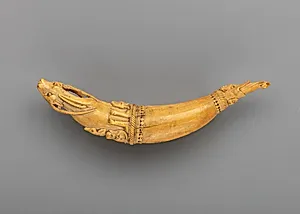
Medium
Ivory
Dimensions
L. 8 1/4 in. (21 cm); D. 1 1/8 in. (2.9 cm); Wt. 2.8 oz. (79.4 g)
Classification
Firearms Accessories-Flasks & Primers
Culture
Indian
Department
Arms and Armor
Museum
Metropolitan Museum of Art, New York, NY
Credit
Bequest of George C. Stone, 1935
Accession Number
36.25.2422
Rights
Public Domain
Art Historical Context
This elegant ivory priming flask, crafted in India during the 17th or 18th century, served as a vital accessory for early firearms like matchlocks or flintlocks. During the Mughal era, when gunpowder weapons transformed South Asian warfare and hunting, these flasks held fine priming powder to ignite the main charge in a musket's pan. Compact and portable—measuring just 8¼ inches long and weighing under 3 ounces—it was designed for warriors or nobles, reflecting the blend of military utility and refined craftsmanship in the Islamic-influenced courts of the time. Carved from ivory, a prized material symbolizing luxury and skill in Indian art, the flask showcases the region's mastery of intricate turning and polishing techniques. Ivory's smooth, durable surface allowed for precise shaping into a cylindrical form ideal for dispensing powder without spilling, while its pale sheen evoked prestige. Though the artist remains unknown, such objects highlight the anonymous yet exceptional artisans who elevated everyday tools into works of functional beauty. Now in the Metropolitan Museum of Art's Arms and Armor Department, thanks to the 1935 bequest of collector George C. Stone, this flask offers a window into India's dynamic arms culture, bridging artistry and innovation.