
ca. 1840
Medium
Woodblock print (surimono); ink and color on paper
Dimensions
8 7/16 x 7 3/8 in. (21.4 x 18.7 cm)
Classification
Prints
Culture & Period
Japan · Edo period (1615–1868)
Department
Asian Art
Museum
Metropolitan Museum of Art, New York, NY
Credit
Rogers Fund, 1923
Accession Number
JP1454
Rights
Public Domain
Tags
Art Historical Context
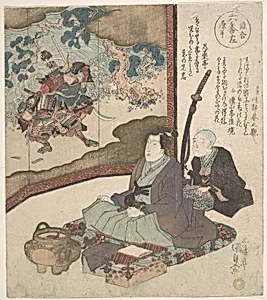
This exquisite woodblock print (surimono) by Utagawa Kunisada1786–1864), created around 1840 during Japan's Edo period (16151868), captures the vibrant world of ukiyo-e, the "pictures of the floating world" that celebrated everyday pleasures, theater, and heroism. Kunisada, a master the Utagawa school and later known as Toyokuni III was renowned for his dynamic depictions of kabuki actors and warriors, blending bold colors, expressive poses, and intricate details in ink and color on paper. Measuring just 8 7/16 x 7 3/8 inches, its intimate scale suits private viewing. As a surimono—a luxurious, privately commissioned print often made for New Year's greetings or poetry gatherings—this work stands out for its refined techniques. Artisans applied subtle embossing, metallic pigments, and precise color gradations (bokashi) via woodblocks, elevating it beyond mass-produced ukiyo-e. The scene likely features men wielding swords amid ornate screens, evoking samurai valor or dramatic kabuki scenes, symbols of bushido honor and artistic performance in Edo culture. Housed in the Metropolitan Museum of Art's Asian Art Department (Rogers Fund, 1923), this print offers a window into Japan's golden age of printmaking, where art democratized elite themes for discerning patrons. A testament to Kunisada's enduring legacy, it invites visitors to ponder the clash of steel and silk in a fleeting, beautiful moment.
About the Artist
Utagawa Kunisada · 1786–1864
**Utagawa Kunisada (1786–1865)** Born in 1786 in the Honjo district of Edo (modern Tokyo), Utagawa Kunisada hailed from a family with a hereditary ferry-boat service that provided financial stability, allowing him to pursue art from a young age. His father, an amateur poet of note, died shortly after his birth, leaving young Sumida Shōgorō (Kunisada's childhood name) to nurture his evident talent...