
1757–1820
Medium
Woodblock print; ink and color on paper
Dimensions
A. 15 5/16 x 10 6/16 in. (38.9 x 26.4 cm); B. 15 1/2 x 10 5/16 in. (38.9 x 26.4 cm)
Classification
Prints
Culture & Period
Japan · Edo period (1615–1868)
Department
Asian Art
Museum
Metropolitan Museum of Art, New York, NY
Credit
Henry L. Phillips Collection, Bequest of Henry L. Phillips, 1939
Accession Number
JP2821a, b
Rights
Public Domain
Tags
Art Historical Context
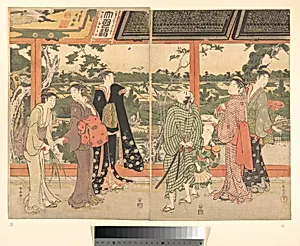
This exquisite woodblock print by Kubo Shunman (1757–1820) hails from Japan's Edo period (1615–1868), a golden age for ukiyo-e art that celebrated the "floating world" of everyday beauty, theater, and nature. Shunman, a versatile artist and poet, masterfully employed ink and color on paper to capture fleeting moments, blending delicate lines with vibrant hues in this two-sheet composition (each approximately 15½ x 10½ inches). Likely depicting men and women amid trees, it evokes the serene harmony of human figures within lush natural settings, a common motif in Edo prints that reflected urban Japan's fascination with seasonal landscapes and social encounters. Woodblock printing, the medium here, was revolutionary for its accessibility—affordable multiples allowed art to permeate merchant-class homes. Shunman's technique highlights the precision of collaborative carving and printing, where colors were layered by hand for depth and subtlety. Part of the Metropolitan Museum of Art's Henry L. Phillips Collection (bequest, 1939), this print exemplifies Asian Art's enduring appeal, offering visitors a window into 19th-century Japan's refined aesthetics and cultural vibrancy.
About the Artist
Kubo Shunman · 1757–1820
Japanese, 1757–1820