
19th century
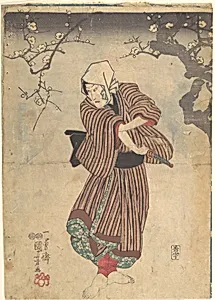
Medium
Woodblock print; ink and color on paper
Dimensions
Image: 13 1/2 × 9 1/2 in. (34.3 × 24.1 cm)
Classification
Prints
Culture & Period
Japan · Edo period (1615–1868)
Department
Asian Art
Museum
Metropolitan Museum of Art, New York, NY
Credit
Gift of the Estate of Samuel Isham, 1914
Accession Number
JP212.30
Rights
Public Domain
Tags
Art Historical Context
This exquisite woodblock print by Utagawa Kuniyoshi a leading figure of Japan's Edo period (1615–1868), exemplifies the vibrant ukiyo-e tradition—"pictures of the floating world"—that captured everyday beauty and drama for a wide audience. Created in the 19th century using ink and color on paper the image measures 13½ × 9½ inches, a standard size for these affordable, mass-produced artworks that brought artistry into homes across Japan. Kuniyoshi, renowned for his dynamic compositions and imaginative flair, often blended human figures with nature, as seen here in motifs of men amid flowers and trees. The woodblock technique, involving carved wooden blocks inked and printed in layers for rich colors, allowed for stunning effects like subtle gradients and bold contrasts, revolutionizing accessible visual storytelling during a time of urban prosperity and cultural flourishing in Edo (modern Tokyo). Housed in the Metropolitan Museum of Art's Asian Art Department since a 1914 gift from the Estate of Samuel Isham, this print offers a window into Japan's artistic golden age, where nature's harmony with humanity reflected deeper philosophical ideals. A true gem for admirers of Eastern printmaking!
About the Artist
Utagawa Kuniyoshi · 1797–1861
Utagawa Kuniyoshi (1797–1861) was born in Edo to the silk-dyer Yanagiya Kichiyemon, originally bearing the childhood name Yoshisaburō. From a young age, he assisted in his family's pattern design work, which sharpened his innate mastery of color and textile motifs that would permeate his later prints. At around twelve years old, his prodigious drawing skills drew the attention of the renowned Utag...