
Medium
Woodblock print; ink and color on paper
Dimensions
Image: 14 5/8 × 10 1/8 in. (37.1 × 25.7 cm)
Classification
Prints
Culture & Period
Japan · Edo period (1615–1868)
Department
Asian Art
Museum
Metropolitan Museum of Art, New York, NY
Credit
Museum Accession
Accession Number
JP1092.1
Rights
Public Domain
Tags
Art Historical Context
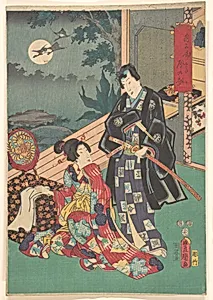
This exquisite woodblock print by Utagawa Kunis (1786–1865), a leading figure of Japan's Edo period (1615–1868), captures the vibrant spirit of ukiyo-e, or "pictures of the floating." Known for his masterful depictions of kabuki actors, beautiful women (bijin-ga), and dramatic scenes, Kunisada thousands of prints that brought theater and everyday life to the masses. Though the exact date and subject remain unidentified, the imagery—featuring swords, men, women, a moonlit sky, and trees—evokes a tense, romantic, or theatrical moment, possibly inspired by popular kabuki plays blending warriors, lovers, and nature. Crafted using the intricate woodblock technique, where artisans carved separate blocks for each color and layer of ink on paper, this 14⅝ × 10⅛ in. (37.1 × 25.7 cm) print exemplifies the precision and bold palette of ukiyo-e. Colors were hand-mixed and printed in precise registration, allowing for luminous effects like the glowing moon amid shadowy trees. During the Edo era, such affordable prints democratized art, adorning homes and fueling a booming publishing industry. Housed in the Metropolitan Museum of Art's Asian Art Department, this work highlights Kunisada's influence on later artists like Toulouse-Lautrec and his role in preserving Japan's cultural narratives. Visitors, imagine the lantern-lit streets of old Tokyo, where these prints whispered stories of passion and valor.
About the Artist
Utagawa Kunisada · 1786–1864
**Utagawa Kunisada (1786–1865)** Born in 1786 in the Honjo district of Edo (modern Tokyo), Utagawa Kunisada hailed from a family with a hereditary ferry-boat service that provided financial stability, allowing him to pursue art from a young age. His father, an amateur poet of note, died shortly after his birth, leaving young Sumida Shōgorō (Kunisada's childhood name) to nurture his evident talent...