
Printed Textile
Unknown Artist
15th century
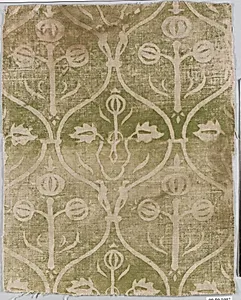
Medium
Linen
Dimensions
Overall: 9 1/4 x 11 1/2in. (23.5 x 29.2cm)
Classification
Textiles-Printed
Culture
German
Department
Medieval Art
Museum
Metropolitan Museum of Art, New York, NY
Credit
Rogers Fund, 1909
Accession Number
09.50.1092
Rights
Public Domain
Art Historical Context
This exquisite 15th-century printed, crafted on fine linen by an unknown German artist, offers a rare glimpse into late medieval craftsmanship. Measuring just 9¼ x 11½ inches, this small fragment from the Metropolitan Museum of Art's Medieval Art collection was acquired through the Rogers Fund in 9. Housed among treasures of the Gothic era, it exemplifies the burgeoning artistry of printed textiles in Germany, a time when block-printing techniques were revolutionizing fabric decoration just as movable type transformed books with Gutenberg's innovations around 1450. The use of linen—a lightweight, breathable fabric ideal for clothing and household linens—highlights practical innovation. Artisans likely applied pigments via carved wooden blocks, stamping intricate patterns that blended functionality with decoration. This method, predating more advanced printing, allowed for repeatable motifs on everyday items, making artistry accessible beyond elite embroidery or weaving. Culturally, such textiles reflect Germany's vibrant late medieval textile trade, bridging ecclesiastical vestments and secular fashion. As a preserved example of early printed cloth, it underscores the era's technical ingenuity, inviting us to appreciate how everyday materials carried profound artistic expression.