
Project for a Monumental Tomb
16th century
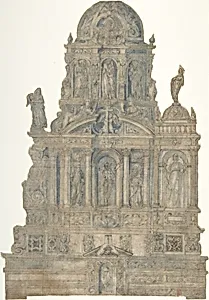
Medium
Pen and brown ink, brush and blue wash or watercolor
Dimensions
sheet: 13 7/8 x 9 9/16 in. (35.3 x 24.3 cm)
Classification
Drawings
Department
Drawings and Prints
Museum
Metropolitan Museum of Art, New York, NY
Credit
The Elisha Whittelsey Collection, The Elisha Whittelsey Fund, 1949
Accession Number
49.19.76
Rights
Public Domain
Tags
Art Historical Context
In the heart of the 16th Italian Renaissance, this anonymous drawing, *Project for a Monumental*, captures the era's fascination with grandeur and eternity. Likely a preparatory design for a lavish funerary monument—common for popes, nobles, or dignitaries—it features intricate architectural elements intertwined with human figures, ev the tombs of St. Peter's Basilica or those by artists like Michelangelo. Such projects blended sculpture, architecture, and symbolism, immortalizing the deceased amid allegorical scenes of virtue, faith, and resurrection. Rendered in pen and brown ink with brush and blue wash (or watercolor), the work showcases Renaissance draftsmanship at its finest. The fine ink lines delineate precise structures and dynamic figures, while the subtle blue wash adds depth, modeling forms as if carved from marble and set against vast skies. This mixed-media technique allowed artists to explore light, shadow, and spatial illusion on paper, bridging two-dimensional sketches with three-dimensional visions. Housed in the Metropolitan Museum of Art's Drawings and Prints department, this sheet from The Elisha Whittelsey Collection offers a glimpse into the collaborative workshops of the time, where anonymous talents contributed to Italy's enduring legacy of monumental art. It reminds us how drawings like this fueled the opulent tombs that defined Renaissance Rome.