
Punch Bowl
Designed 1891, made 1892
Medium
Hard-paste porcelain
Dimensions
87.7 × 78.8 × 80 cm (34 1/2 × 31 × 31 1/2 in.)
Classification
ceramics
Department
Applied Arts of Europe
Museum
Art Institute of Chicago
Accession Number
263124
Rights
Public Domain
About this artwork
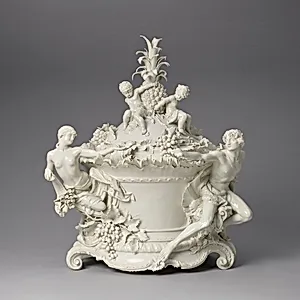
The monumental size and dynamic modeling of this punch bowl showcase the sculptural capabilities of porcelain. Three figures in classical draperies encircle the bowl; they reach toward one another bearing roses and grapevines while three putti gather around a pineapple knop on the lid. Created by the Royal Porcelain Manufactory in Berlin for the 1893 World Columbian Exposition in Chicago, the bowl’s symbols of hospitality and celebration also reflect ideas of German national identity that emerge...
Art Historical Context
This impressive punch bowl, created by the Königliche Porzellan-Manufaktur Berlin (KPM), showcases the pinnacle of late 19th-century European porcelain craftsmanship. Designed in 1891 and produced the following year, the large vessel—measuring nearly three feet across—demonstrates the factory’s mastery of hard-paste porcelain, a durable material prized for its translucency and strength. As one of Germany’s most prestigious manufactories, KPM operated under royal patronage and supplied fine tableware to European courts, reflecting the era’s emphasis on opulent dining and social display. The scale of this bowl suggests it served ceremonial rather than everyday purposes, likely gracing grand banquets during the newly unified German Empire. Its substantial dimensions highlight the technical challenges of firing such large ceramic forms without distortion, a feat that underscored KPM’s advanced production methods. Today housed in the Art Institute of Chicago’s Applied Arts of Europe collection, the piece offers visitors a tangible connection to the refined tastes and industrial artistry of the 1890s.