
Purse
Unknown Artist
early 17th century
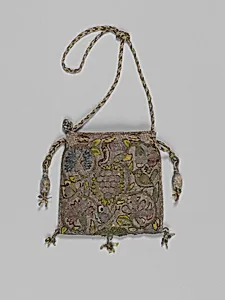
Medium
Canvas worked with silk and metal thread, glass beads, spangles; Gobelin, tent, and detached buttonhole stitches; silk cord and silk and metal thread tassels
Dimensions
Overall (excluding tassels and draw cord): 5 1/8 x 5 1/8 in. (13 x 13 cm)
Classification
Textiles-Embroidered
Culture
British
Department
European Sculpture and Decorative Arts
Museum
Metropolitan Museum of Art, New York, NY
Credit
Rogers Fund, by exchange, 1929
Accession Number
29.23.15
Rights
Public Domain
Tags
Art Historical Context
This exquisite early 17th-century British purse, crafted by an unknown artist, exemplifies the pinnacle of Jacobean embroidery—a domestic art form that rivaled professional painting in skill and intricacy. Measuring just 5⅛ x 5⅛ inches, this compact drawstring accessory was likely carried by a woman of means, serving both practical and ornamental purposes. Its canvas ground bursts with embroidered motifs of butterflies, flowers, and birds, rendered in vibrant silk and shimmering metal threads, accented by glass beads and spangles for a jewel-like sparkle. Silk cord tassels add a playful flourish, evoking the era's love for opulent personal items. The purse showcases advanced techniques like Gobelin, tent, and detached buttonhole stitches, which create textured depth and airy lace effects. Gobelin and tent stitches provide sturdy, pictorial coverage ideal for canvas work, while detached buttonhole lends a delicate, openwork quality—skills often taught to elite women as markers of refinement and virtue. In British culture, such embroideries reflected the natural world's harmony, symbolizing beauty and transience amid the Stuart court's growing taste for elaborate textiles. Now in the Metropolitan Museum of Art's European Sculpture and Decorative Arts collection (Rogers Fund, by exchange, 1929), this purse offers a intimate glimpse into 17th-century life, where everyday objects became canvases for artistic mastery.