
Purse
Unknown Artist
first quarter 17th century
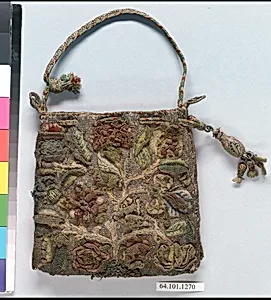
Medium
Silk and metal thread on canvas
Dimensions
H. 4 1/2 x W. 4 7/8 inches (11.4 x 12.4 cm)
Classification
Textiles-Embroidered
Culture
British
Department
European Sculpture and Decorative Arts
Museum
Metropolitan Museum of Art, New York, NY
Credit
Gift of Irwin Untermyer, 1964
Accession Number
64.101.1270
Rights
Public Domain
Tags
Art Historical Context
This exquisite embroidered purse, crafted in Britain during the first quarter of 17th century, the artistry of Jacobean-era needlework. Measuring just 4½ by 4⅞ inches, it was fashioned from silk and metal threads worked on canvas—a technique known as canvaswork embroidery, which provided a sturdy ground for intricate stitching. The floral motifs, suggested by its tags, likely burst with vibrant blooms, rendered in shimmering silks and luxurious metal threads that caught the light, elevating this everyday accessory into a miniature masterpiece. In the early Stuart period, under King James I, such purses served both men and women as essential coin carriers, often doubling as status symbols. Created by an unknown artist—possibly a skilled amateur or professional embroiderer—the piece reflects the era's fascination with nature-inspired designs and opulent materials. Metal threads, including purls and coils, added a jewel-like gleam, mimicking the grandeur of courtly fashion amid England's growing textile trade. Housed in the Metropolitan Museum of Art's Department of European Sculpture and Decorative Arts (gift of Irwin Untermyer, 1964), this rare survivor highlights the cultural importance of embroidery as a domestic art form. It invites us to appreciate the patience and creativity behind these tiny treasures, bridging personal expression with historical elegance.