
Purse frame
Unknown Artist
probably second half 16th century
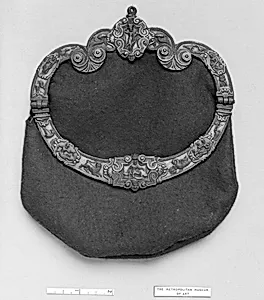
Medium
Iron, gold
Dimensions
Overall: 5 5/8 × 6 1/8 in. (14.3 × 15.6 cm)
Classification
Metalwork-Iron
Culture
Northern Italian
Department
European Sculpture and Decorative Arts
Museum
Metropolitan Museum of Art, New York, NY
Credit
Gift of J. Pierpont Morgan, 1917
Accession Number
17.190.817
Rights
Public Domain
Tags
Art Historical Context
This exquisite purse frame, crafted in northern Italy during the late 16th century, exemplifies the Renaissance mastery of metalwork. Measuring just 5⅝ × 6⅛ inches, it is forged from iron and enriched with gold, creating a delicate yet durable frame for a gentleman's pouch—a fashionable accessory among the elite. Northern Italian workshops, particularly in regions like Lombardy were renowned for such intricate ironwork, blending functionality with opulent decoration to signal wealth and refined taste. The frame's surface bursts with lively motifs of birds and human figures, likely executed through piercing, chasing, and gilding techniques that allowed light to play across the openwork design. These naturalistic elements reflect the era's fascination with humanism and the natural world, echoing motifs in contemporary jewelry and arms. As a surviving example of everyday luxury, it highlights the technical prowess of anonymous artisans who elevated humble iron into sculptural art. A generous gift from J. Pierpont Morgan in 1917, this piece now graces the Metropolitan Museum of Art's European Sculpture and Decorative Arts collection, offering visitors a tangible glimpse into Renaissance daily splendor.