
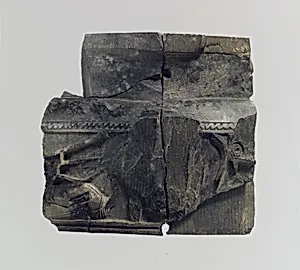
Pyxis fragment
Unknown Artist
ca. 9th century BCE
Medium
Ivory
Dimensions
2.24 x 2.32 x 0.31 in. (5.69 x 5.89 x 0.79 cm)
Classification
Ivory/Bone-Vessels
Culture & Period
Iran · Iron Age II, Hasanlu Period IV
Department
Ancient Near Eastern Art
Museum
Metropolitan Museum of Art, New York, NY
Credit
Rogers Fund, 1965
Accession Number
65.163.80
Rights
Public Domain
Art Historical Context
This delicate ivory fragment from a pyxis—a small, cylindrical vessel likely used for cosmetics or jewelry—offers a glimpse into the refined artistry of Iron Age Iran around the 9th century BCE Discovered at the ancient site of Hasanlu, bustling center during Period IV, it exemplifies the luxury goods produced in this vibrant region of the Ancient Near East. Measuring just over 2 inches across, its modest size belies its cultural prestige, as such items were reserved for elite households. Carved from elephant ivory, a prized material often imported via extensive trade networks, the fragment highlights sophisticated techniques in ancient ivory working. Artisans shaped and incised the bone-like medium with precision, creating vessels that blended functionality with ornamental beauty. Though incomplete, it evokes the daily luxuries of Iron Age life, bridging the gap between nomadic traditions and emerging urban cultures before the rise of the Achaemenid Empire. Housed in the Metropolitan Museum of Art's Ancient Near Eastern Art department (acquired via the Rogers Fund in 1965), this piece underscores Hasanlu's role as a key archaeological treasure trove, destroyed by fire around 800 BCE. It invites us to ponder the skilled hands behind these enduring relics, connecting modern visitors to a world of ancient elegance.