
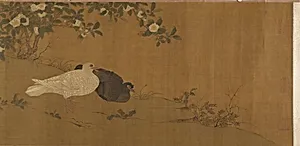
明/清 佚名 舊傳艾宣 鵪鶉 卷|Quail
Medium
Handscroll; ink and color on silk
Dimensions
12 15/16 x 78 5/8 in. (32.9 x 199.7 cm)
Classification
Paintings
Culture & Period
China · Ming (1368–1644)–Qing (1644–1911) dynasty
Department
Asian Art
Museum
Metropolitan Museum of Art, New York, NY
Credit
John Stewart Kennedy Fund, 1913
Accession Number
13.220.7
Rights
Public Domain
Tags
Art Historical Context
This exquisite handscroll, titledQuail* (鵪鶉 卷), hails from China's Ming (1368–4) or Qing (1644–1911) and is painted in ink and color on silk. Measuring an elongated 12 15/16 x 78 5/8 inches, it exemplifies the intimate format of Chinese handscrolls, designed to be unrolled gradually for private contemplation. Long attributed to the artist Ai Xuan but now credited to an unidentified master, the work entered the Metropolitan Museum of Art's collection in 1913 through the John Stewart Kennedy Fund. Belonging to the cherished Chinese genre of bird-and-flower painting, it captures quails amid blooms, celebrating nature's delicate harmony. Ink outlines provide precise detail, while subtle colors evoke seasonal vitality—hallmarks of Ming-Qing artistry that blended literati refinement with professional finesse. Such paintings, popular among scholars and collectors, symbolized moral virtues and the fleeting beauty of life, inviting viewers to pause and reflect. As a silk medium, the scroll highlights technical virtuosity: its luminous surface enhances the feathers' texture and floral vibrancy, a tradition rooted in Song dynasty innovations. Today, it offers modern visitors a window into imperial China's aesthetic world, where art fostered serene appreciation of the everyday sublime.