
Quaker Doll
1938
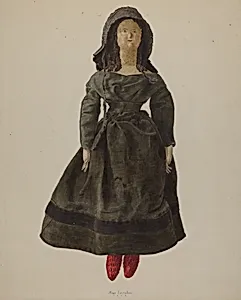
Medium
watercolor, graphite, and pen and ink on paperboard
Dimensions
overall: 45.9 x 38 cm (18 1/16 x 14 15/16 in.) Original IAD Object: 16" high
Classification
Index of American Design
Department
CG-W
Museum
National Gallery of Art, Washington, D.C.
Credit
Index of American Design
Accession Number
1943.8.15449
Rights
Public Domain
Art Historical Context
Behold the *Quaker Doll*, a rendered watercolor, graphite, and pen-and-ink depiction by Chicago artist Max Fernekes created in 1938. Measuring 45.9 x 38 cm, this captures a charming 16-inch folk doll dressed in the austere, gray attire emblematic of Quaker simplicity—high-necked gown, white cap, and bonnet—evoking 19th-century American domestic craft traditions. Fernekes contributed to the Index of American Design (IAD), a landmark Works Progress Administration (WPA) project from 1935 to 1942. During the Great Depression, over 200 artists documented thousands of everyday American objects, from quilts to weathervanes, to preserve the nation's cultural heritage amid economic hardship. Quaker dolls, handmade by women in Pennsylvania Dutch and New England communities, symbolized piety and modesty, their plain forms contrasting ornate Victorian toys. Fernekes's technique shines in the layered watercolor washes for subtle fabric tones, precise graphite shading for three-dimensionality, and fine pen lines for intricate details like stitching and folds. Housed in the National Gallery of Art, this IAD treasure highlights how folk art reflected communal values, offering visitors a window into America's handmade past.