
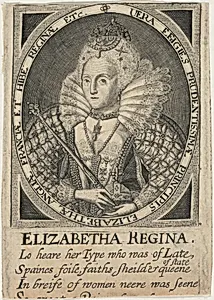
Queen Elizabeth
1601 to 1650
Medium
engraving
Dimensions
sheet: 9.7 × 6.9 cm (3 13/16 × 2 11/16 in.)
Classification
Department
CG-E
Museum
National Gallery of Art, Washington, D.C.
Credit
Rosenwald Collection
Accession Number
1951.11.313
Rights
Public Domain
Art Historical Context
Behold the delicate engraving *Queen Elizabeth* by John Payne, a modest yet evocative portrait from the early 17th century (ca. 1601–1650). Measuring just 9.7 × 6.9 cm, this intimate print captures the enduring image of Queen Elizabeth I, formidable Tudor monarch who reigned from 1558 to 1603. Payne, an English engraver active during transitional period between the Renaissance and Baroque eras, crafted this work likely as a posthumous tribute, reflecting the queen's iconic status even after her death. Engraving, the medium here, was a revolutionary printmaking technique: artists incised fine lines into a copper plate, inked it, and pressed paper against it to produce multiples. This allowed royal portraits like this one to circulate widely among the literate elite, booksellers, and collectors—democratizing access to regal imagery in an age before photography. Such small-scale prints often adorned personal collections or illustrated pamphlets, amplifying Elizabeth's cult of personality amid England's cultural Golden Age. Housed in the National Gallery of Art's Rosenwald Collection (Department CG-E), this piece exemplifies the meticulous detail and historical resonance of period prints. Visitors, imagine holding a fragment of Elizabethan propaganda in your hand—timeless testimony to a queen whose legacy shaped a nation.
About the Artist
John Payne · 1600–1640
John Payne is an artist whose biographical details remain difficult to establish with certainty, partly because the name is common and several artists of that name were active in different periods and countries. The works attributed to this John Payne suggest engagement with printmaking or illustration traditions, but without confirmed dates, nationality, or documented training, a precise account ...