
Qur'an Manuscript
Unknown Artist
late 18th–early 19th century
Medium
Ink, gold, and lapis on paper; leather binding
Dimensions
H. 6 3/4 in. W. 4 5/8 in. D. 2 1/4 in.
Classification
Codices
Department
Islamic Art
Museum
Metropolitan Museum of Art, New York, NY
Credit
Louis E. and Theresa S. Seley Purchase Fund for Islamic Art, 2009
Accession Number
2009.294
Rights
Public Domain
Tags
Art Historical Context
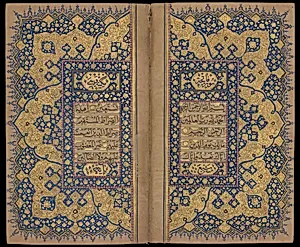
Nestled in the Islamic Art collection at the Metropolitan Museum of Art, this Qur'an manuscript from the late 18th to 19th century exemplifies reverence for the sacred text in Islamic tradition. Crafted by an unknown artist, the compact codex measures just 6 3/4 inches high, making it a portable treasure likely intended for personal devotion or intimate study. Its leather binding protects pages of paper adorned with ink calligraphy, shimmering gold, and vibrant lapis lazuli pigment, reflecting the era's masterful fusion of artistry and spirituality. Calligraphy, as highlighted in the manuscript's tags, forms the heart of its beauty—a sacred craft in Islam where the written word of the Qur'an is elevated to divine art. During this period, possibly within Ottoman or regional Persianate workshops, scribes meticulously copied verses in flowing scripts, often enhanced with illuminated margins. The use of gold for diacritical marks and lapis for rich blues not only ensured legibility but also symbolized the Quran's heavenly light, turning each page into a meditative object. This Seley Purchase Fund acquisition invites us to appreciate how such manuscripts bridged faith and aesthetics, preserving the Quran's message through enduring techniques. Gaze closely, and you'll sense the devotion poured into every stroke.