
Rabat
Unknown Artist
1720–40
Medium
Bobbin lace, Brussels bobbin lace
Dimensions
H. 14 x W. 13 inches (35.6 x 33.0 cm)
Classification
Textiles-Laces
Culture
Flemish, Brussels
Department
European Sculpture and Decorative Arts
Museum
Metropolitan Museum of Art, New York, NY
Credit
Rogers Fund, 1939
Accession Number
39.107.3
Rights
Public Domain
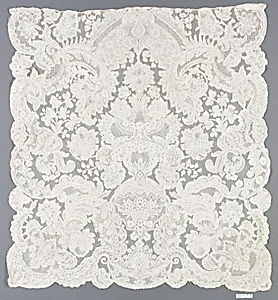
Art Historical Context
Behold the exquisite *Rabat*, a masterful example of Brussels bobbin lace crafted by an unknown Flemish artist between 1720 1740. Measuring 14 x 13 inches, this delicate textile piece—now housed in the Metropolitan Museum Art's Department of European Sculpture and Decor Arts—was acquired through the Rogers Fund in 9. As a classic "rabat," it served as an elegant neck collar or clerical accessory, embodying the opulent fashion of the early 18th century. Brussels bobbin lace, renowned for its intricate construction, represents the pinnacle of Flemish lacemaking during the Baroque era. Artisans wove thousands of tiny bobbins by hand to create airy, floral motifs and geometric patterns, often incorporating innovative "snowflake" grounds—fine mesh fillings that mimic frost on glass. This technique demanded extraordinary skill and patience, transforming silk and linen threads into lightweight yet durable luxury items prized across Europe. In the context of Flemish culture, such laces were status symbols for nobility and clergy, reflecting Brussels' dominance as a lace-making hub. This *Rabat* offers visitors a tactile glimpse into the refined artistry of the Rococo transition, where ornamentation celebrated nature's delicacy and human ingenuity.