
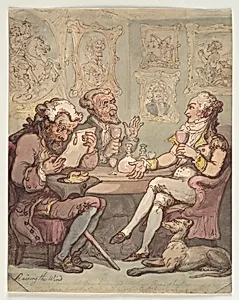
Raising the Wind
Medium
Pen and brown ink and watercolor over graphite on off-white paper.
Dimensions
296 x 235 mm.
Classification
Drawings
Department
Robert Lehman Collection
Museum
Metropolitan Museum of Art, New York, NY
Credit
Robert Lehman Collection, 1975
Accession Number
1975.1.894
Rights
Public Domain
Tags
Art Historical Context
Thomas Rowlandson's *Raising the Wind* (1812) is a lively satirical drawing that captures the boisterous spirit of Regency-era Britain. Created with pen and brown ink and watercolor over graphite on off-white paper (296 x 235 mm), it exemplifies Rowlandson's mastery of caricature, a style he pioneered alongside contemporaries like James Gillray. As a leading British satirist, Rowlandson delighted in skewering social vices, and this piece—now in the Robert Collection at The Metropolitan Museum of Art— pokes fun at the idiom "raising the wind," slang for scraping together money through desperate schemes, amid scenes of revelry. The composition buzzes with humorous details: men immersed in reading (perhaps newspapers or bills), indulging in drink, and surrounded by loyal dogs, blending everyday domesticity with comic excess. Rowlandson's fluid ink lines and vibrant watercolors bring a dynamic energy, allowing subtle shading and exaggerated expressions to heighten the satire on male folly and leisure gone awry. This intimate drawing format made such works popular for private collectors, reflecting the era's booming print culture. Housed in the Met since 1975, *Raising the Wind* offers a window into early 19th-century British humor, reminding us how art can lampoon human quirks with wit and warmth. A perfect gem for satire enthusiasts!
About the Artist
Thomas Rowlandson · 1756–1827
Thomas Rowlandson (1757–1827) was an English artist and caricaturist whose satirical watercolors and prints captured the social life of Georgian Britain with unparalleled wit and technical mastery. Alongside James Gillray, he is recognized as one of the greatest British graphic artists, and his distinctive flowing line and keen observations have made his work integral to understanding late 18th an...