
明早期 刺繡獅子補|Rank Badge with Lion
Unknown Artist
15th century
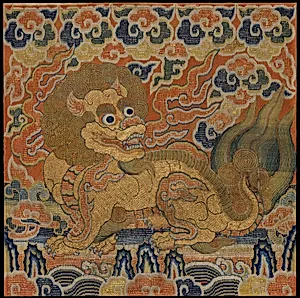
Medium
Silk and metallic-thread embroidery on silk gauze
Dimensions
Overall: 14 1/2 x 14 1/4 in. (36.8 x 36.2 cm)
Classification
Textiles-Embroidered
Culture & Period
China · Ming dynasty (1368–1644)
Department
Asian Art
Museum
Metropolitan Museum of Art, New York, NY
Credit
Purchase, Friends of Asian Art Gifts, in honor of Myron S. Falk Jr., 1988
Accession Number
1988.154.1
Rights
Public Domain
Tags
Art Historical Context
This exquisite *Rank Badge with Lion*, crafted in early Ming dynasty China during the 15th, exemplifies the imperial artistry of the period (1368–1644). Worn on the chest of officials' robes, these *biao ling* (rank badges) were essential symbols status within the rigid bureaucratic hierarchy. The lion motif, embroidered here with vibrant silk and shimmering metallic threads on translucent silk gauze, denoted a high-ranking civil official—likely first or second rank—evoking power, protection, and imperial authority. Lions, absent in native Chinese fauna, were exotic emblems borrowed from Buddhist iconography, blending foreign influence with Confucian order. The badge's technique showcases Ming embroidery mastery: fine satin and couching stitches create a dynamic lion poised amid swirling clouds and waves, rendered in gold, silver, and multicolored silks for a luxurious, three-dimensional effect. Measuring just 14½ x 14¼ inches, its delicate gauze ground allowed light to play across the surface, enhancing its opulence in court settings. Acquired by the Metropolitan Museum of Art in 1988, this rare survivor offers a window into Ming sumptuary laws, where such textiles reinforced social structure and celebrated technical virtuosity.