
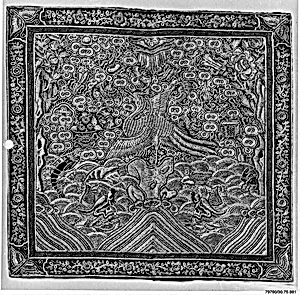
Rank Badge with Pheasant
Unknown Artist
19th century
Medium
Silk, metallic thread on silk
Dimensions
12 × 12 1/2 in. (30.5 × 31.8 cm)
Classification
Textiles-Embroidered
Culture & Period
China · Qing dynasty (1644–1911)
Department
Asian Art
Museum
Metropolitan Museum of Art, New York, NY
Credit
Bequest of William Christian Paul, 1929
Accession Number
30.75.881
Rights
Public Domain
Tags
Art Historical Context
This exquisite *Rank Badge with Pheasant*, crafted in 19th-century Qing dynasty China (1644–1911), is a finely embroidered square insignia worn on the robes of high-ranking civil officials. Known as *buziguan* or mandarin squares, these badges denoted status within the imperial bureaucracy—pheasants specifically symbolized third- to fifth-rank civil servants, evoking grace, beauty, and scholarly virtue. Surrounding bats, a playful pun on *fu* (happiness), added wishes for prosperity and longevity, blending symbolism with imperial hierarchy. Embroidered on silk with shimmering metallic threads, the badge measures 12 × 12½ inches and showcases masterful *couched work* and satin stitching techniques. These methods created a luxurious, three-dimensional effect, with gold and silver threads catching the light to convey prestige. Such textiles were produced in imperial workshops, reflecting the Qing era's pinnacle of embroidery artistry amid a thriving silk trade. Today, housed in the Metropolitan Museum of Art's Asian Art Department (Bequest of William Christian Paul, 1929), this piece offers a window into China's rigid yet colorful social order, where every feather and motif whispered power and good fortune.