
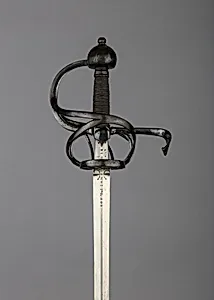
Rapier
Unknown Artist
ca. 1600–20
Medium
Steel
Dimensions
L. 48 in. (121.9 cm); L. of blade 41 3/4 in. (106.1 cm); W. 7 1/2 in. (19.1 cm); D. 5 1/4 in. (13.3 cm); Wt. 3 lb. 3 oz. (1446.8 g)
Classification
Swords
Culture
German
Department
Arms and Armor
Museum
Metropolitan Museum of Art, New York, NY
Credit
Gift of Prince Albrecht Radziwill, by exchange, 1928
Accession Number
28.100.3
Rights
Public Domain
Art Historical Context
This elegant German rapier, dating to around 1600–1620, exemplifies the pinnacle of Renaissance arms craftsmanship. Forged from high-quality steel, it features a slender blade measuring 41¾ inches long, ideal for precise thrusting in duels or self-defense. At 48 inches overall and weighing just over 3 pounds, its proportions allowed for agile, one-handed use, reflecting the era's shift from heavy medieval swords to lighter, more refined civilian weapons. Produced during a turbulent time in the Holy Roman Empire—on the eve of the Thirty Years' War—this rapier would have served as both a practical tool and a symbol of status for nobility or wealthy burghers. The steel's durability and the sword's impressive dimensions highlight German metalworking expertise, renowned across Europe for producing functional yet aesthetically pleasing arms. Rapiers like this often featured ornate hilts (though specifics here are unadorned in description), blending utility with subtle artistry. Its presence in the Metropolitan Museum of Art's Arms and Armor Department, acquired as a gift from Prince Albrecht Radziwill in 1928, underscores its enduring value as a cultural artifact, offering visitors a tangible link to early modern Europe's martial culture.