
Rapier
dated 1560
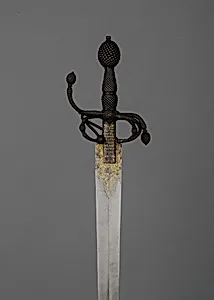
Medium
Steel, iron, gold
Dimensions
L. 34 1/2 in. (87.6 cm); L. of blade 27 1/8 in. (68.9 cm); W. 6 in. (15.2 cm); Wt. 2 lb. 14. oz. (1304.1 g)
Classification
Swords-Hunting
Culture
Italian, Milan
Department
Arms and Armor
Museum
Metropolitan Museum of Art, New York, NY
Credit
Bequest of Col. Wickliffe P. Draper, 1972
Accession Number
1973.27.2
Rights
Public Domain
Art Historical Context
Step into the opulent world of Renaissance Italy with this exquisite rapier, crafted in 1560 by the Milanese master Daniele da Serravalle. Housed in the Metropolitan Museum of Art's Arms and Armor Department, this hunting sword exemplifies the pinnacle of 16th-century Italian swordsmithing. Measuring 34½ inches overall with a 27⅛-inch steel blade, it weighs just under 3 pounds, balancing lethal precision with elegant design—perfect for noble pursuits like hunting wild boar or fencing in aristocratic circles. Milan, a renowned hub of arms production during the Renaissance, produced weapons that were as much art as armament. Da Serravalle's rapier, classified as a hunting sword, reflects this tradition: its steel and iron construction ensured durability for thrusting and slashing, while gold accents—likely inlaid or damascened—added lavish decoration befitting elite patrons. Rapiers like this emerged in the mid-1500s, evolving from broader medieval swords into slender, agile civilian weapons symbolizing status and skill amid Italy's turbulent city-states and chivalric culture. Bequeathed by Col. Wickliffe P. Draper in 1972, this piece invites us to ponder the fusion of function and finery. Imagine a Milanese lord wielding it through Venetian forests— a testament to craftsmanship that armed the body and adorned the spirit.