
Rapier
Unknown Artist
16th century
Medium
Steel, copper wire
Dimensions
L. 42 1/4 in. (107.3 cm); W. 7 1/4 in. (18.4 cm); D. 5 3/8 in. (13.7 cm); Wt. 2 lb. 14 oz. (1304.1 g)
Classification
Swords
Culture
Italian, Venice
Department
Arms and Armor
Museum
Metropolitan Museum of Art, New York, NY
Credit
Gift of William H. Riggs, 1913
Accession Number
14.25.985
Rights
Public Domain
Art Historical Context
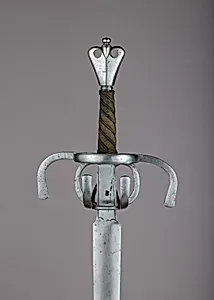
This elegant rapier, crafted in 16th-century Venice, exemplifies the exquisite metalwork of Renaissance Italy's premier maritime republic. Measuring 42¼ inches in length and weighing just under 3 pounds, its steel blade and copper-wire-wrapped hilt were designed for agility and precision, ideal for civilian dueling and self-defense in an era of chivalric codes and street brawls. Venetian artisans, renowned for their trade-fueled innovations, blended functionality with subtle artistry, making such weapons status symbols for nobles and merchants. Rapiers emerged in the late 15th century as thrusting swords supplanted heavier medieval blades, reflecting evolving combat styles influenced by fencing masters like those in Venice's vibrant academies. This piece, classified among swords in the Metropolitan Museum of Art's Arms and Armor collection, highlights Italy's pivotal role in transforming warfare into a refined art form—where even steel conveyed cultural prestige. A generous gift from William H. Riggs in 1913, it invites visitors to ponder Venice's golden age, when gondolas glided past forges producing tools of both peace and honor.