
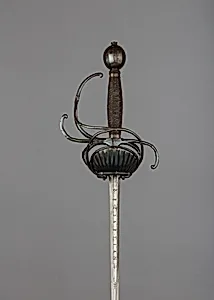
Rapier
Unknown Artist
ca. 1600
Medium
Steel, iron wire
Dimensions
L. 56 1/4 in. (142.9 cm); L. of blade 49 1/2 in. (125.7 cm); W. 6 1/4 in. (15.9 cm); D. 4 3/4 in. (12.1 cm); Wt. 2 lb. 2 oz. (963.9 g)
Classification
Swords
Culture
blade, Spanish
Department
Arms and Armor
Museum
Metropolitan Museum of Art, New York, NY
Credit
Gift of William H. Riggs, 1913
Accession Number
14.25.1185
Rights
Public Domain
Art Historical Context
This exquisite rapier, dating to around 1600, exemplifies the pinnacle of Renaissance arms craftsmanship. Forged with a Spanish blade—likely from the renowned steelworks of Toledo—the sword features a slender, thrusting blade measuring 49½ inches long, ideal for the dueling techniques that defined European nobility during the late 16th and early 17th centuries. Its hilt, wrapped in iron wire for a secure grip, balances form and function in a weapon weighing just over 2 pounds, allowing agile maneuvers in civilian self-defense or formal challenges. Rapiers like this one marked a shift from medieval broadswords to lighter, more refined civilian arms, reflecting the era's emphasis on personal honor and swordsmanship schools across Europe. The Spanish blade's superior tempering and etching techniques ensured exceptional durability and sharpness, making it a coveted export prized by gentlemen from England to the Americas. A gift to the Metropolitan Museum of Art from William H. Riggs in 1913, this rapier invites visitors to ponder the artistry in weaponry—where metallurgy met mastery, blending lethal utility with elegant design.