
Rapier
ca. 1625
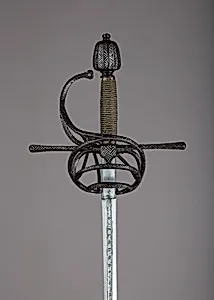
Medium
Steel, silver, wood, copper alloy
Dimensions
L. 49 1/2 in. (125.7 cm); L. of blade 43 in. (109.2 cm); W. 8 1/2 in. (21.6 cm); D. 5 in. (12.7 cm); Wt. 2 lb. 10 oz. (1190.7 g)
Classification
Swords
Culture
hilt, Italian; blade, German, Solingen
Department
Arms and Armor
Museum
Metropolitan Museum of Art, New York, NY
Credit
Gift of William H. Riggs, 1913
Accession Number
14.25.1191
Rights
Public Domain
Art Historical Context
This elegant rapier, crafted around 1625 by Clemens Hartkopf, exemplifies the refined artistry of early seventeenth-century European sword-making. Measuring over four feet in length with a gracefully tapered blade, the weapon combines a German blade from the renowned Solingen workshops with an Italian-style hilt. Its materials—steel for strength, accented by silver, wood, and copper alloy—highlight the blend of functionality and luxury typical of high-status arms from this period. Rapiers like this one served not only as practical dueling weapons but also as symbols of prestige and refinement during an era when personal combat and courtly display often intersected. The division of labor between regions underscores the international nature of arms production, with Solingen blades prized for their quality and Italian hilt designs favored for their ornate aesthetics. Such pieces were frequently gifted or commissioned by nobility, reflecting both martial skill and artistic patronage. Housed in the Metropolitan Museum of Art’s Arms and Armor collection, this rapier offers visitors a tangible connection to the cultural values of the time, where beauty and utility merged in objects of daily life and defense. Its relatively light weight of just over two and a half pounds suggests it was designed for agile use while still conveying elegance through its decorative details.