
Rapier and Parrying Dagger
ca. 1580
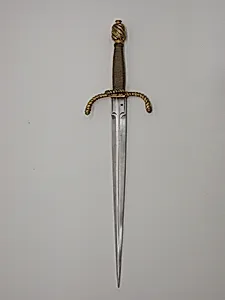
Medium
Steel, gold, copper wire, wood, velvet
Dimensions
L. 48 3/4 in. (123.8 cm); W. 8 1/2 in. (21.6 cm); D. 5 in. (12.7 cm); Wt. 3 lb. 5 oz. (1507 g)
Classification
Swords
Culture
German; rapier blade, Spanish, Toledo
Department
Arms and Armor
Museum
Metropolitan Museum of Art, New York, NY
Credit
Bashford Dean Memorial Collection, Gift of Mr. and Mrs. Robert W. de Forest, 1929
Accession Number
29.157.13a, b, .14
Rights
Public Domain
Art Historical Context
Step into the opulent world of late Renaissance Europe with this exquisite *Rapier and Parrying*, crafted around 1580 by the skilled bladesmith Juan Martinez. Housed in the Metropolitan Museum of Art's Arms and Armor Department, this German masterpiece features a rapier blade forged in Spain's legendary Toledo workshops—renowned for their superior steel tempering and razor-sharp edges. Measuring nearly four feet in length and weighing over three pounds, the set combines deadly functionality with lavish decoration, including gold inlays, twisted copper wire, wooden grips, and velvet wrapping for a secure, luxurious hold. Rapiers like this emerged in the 16th century as the weapon of choice for civilian dueling and self-defense among nobility, paired with a parrying dagger in the off-hand to block and counter strikes. This duo reflects the era's fencing treatises, emphasizing agility over brute force amid the courts of Spain, Italy, and the Holy Roman Empire. The Toledo blade's Hispanic origin highlights the vibrant exchange of metallurgical expertise across Europe. What elevates this from mere armament to art is its meticulous craftsmanship: the steel's subtle damascening and opulent hilt materials signal status for an elite owner. A gift to the Bashford Dean Memorial Collection in 1929, it embodies the fusion of warfare, fashion, and artistry in the Age of Exploration.