
Rasp
Unknown Artist
19th century
Medium
wood
Dimensions
L. 53.5 × D. 2.1 cm (21 1/16 × 13/16 in.)
Classification
Idiophone-Scraped
Culture
Native American (Seri, probably), Yuman family
Department
Musical Instruments
Museum
Metropolitan Museum of Art, New York, NY
Credit
The Crosby Brown Collection of Musical Instruments, 1889
Accession Number
89.4.672a
Rights
Public Domain
Art Historical Context
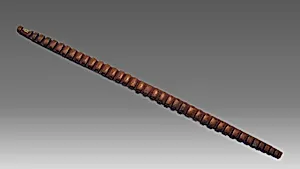
This intriguing wooden rasp, crafted by an unknown artist in the19th century, hails from the Native American Seri people (probably of the Yuman family) the arid regions of the Sonoran Desert. Measuring53.5 cm long and 2.1 cm in diameter, its simple yet functional form exemplifies utilitarian artistry. As a scraped idiophone, the rasp produces a rasping sound when a stick is drawn across its notched surface—a technique rooted in indigenous traditions for rhythm and accompaniment. In Seri culture, such instruments played vital roles in communal ceremonies, storytelling, and social gatherings, bridging the auditory and spiritual worlds. The wood's natural grain and carving reflect resourcefulness, adapting desert-hardy materials like mesquite or ironwood into tools of expression. Though modest in appearance, it embodies the ingenuity of Yuman-speaking peoples, who sustained rich oral histories through sound. Acquired as part of The Crosby Brown Collection of Musical Instruments in 1889, this rasp now resides in the Metropolitan Museum of Art's Musical Instruments department. It invites visitors to ponder the rhythmic heartbeat of Native American life, where everyday objects double as cultural treasures.