
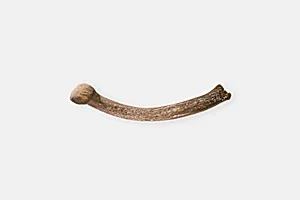
Razor Handle for 35.3.28a
Unknown Artist
ca. 1504–1447 B.C.
Medium
Wood
Dimensions
L. 7 cm (2 3/4 in.); Diam. of knob 1 cm (3/8 in.)
Classification
Razor handle, Amenemhat
Period
New Kingdom
Department
Egyptian Art
Museum
Metropolitan Museum of Art, New York, NY
Credit
Rogers Fund, 1935
Accession Number
35.3.28b
Rights
Public Domain
Art Historical Context
This delicate wooden razor handle, dating to the early New Kingdom's Dynasty 18 (ca. 1504–1447 B.C.), offers a glimpse into the everyday grooming rituals of ancient Egyptians. Measuring just 7 cm long with a 1 cm knobbed end, it was likely designed for portability and precise handling, paired with a blade now cataloged separately as 35.3.28a. Crafted from wood—a material often imported and highly valued in Egypt due to scarce local supplies—the handle exemplifies the fine woodworking skills of the period. In the prosperous era of Dynasty 18, under pharaohs like Thutmose I or Hatshepsut, personal hygiene held deep cultural and religious significance. Egyptians shaved their heads and bodies as a symbol of purity, warding off lice and aligning with ideals of cleanliness for both elites and commoners. Razors like this were essential tools, reflecting a society where grooming intersected with spirituality and social status. Today, preserved through the Rogers Fund at The Metropolitan Museum of Art, this unassuming artifact survives as a testament to ancient ingenuity. Its survival highlights the enduring craftsmanship of New Kingdom artisans, turning a functional object into a window on intimate aspects of life over 3,500 years ago.