
Rebellious Captive
1505–45
Medium
Plaster
Classification
Sculpture-Reproductions-Casts
Culture
Italian
Department
European Sculpture and Decorative Arts
Museum
Metropolitan Museum of Art, New York, NY
Credit
John Taylor Johnston Memorial Collection, 1895
Accession Number
95.49.2
Rights
Public Domain
Tags
Art Historical Context
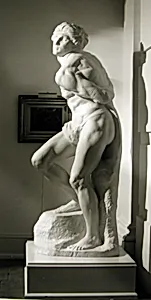
Michelangelo Buonarroti’s *Rebellious Captive*, created between 1505 and 1545, captures the raw power and emotional intensity of the Italian Renaissance. Intended as part of the ambitious tomb for Pope Julius II, this plaster cast reproduces one of the artist’s celebrated “Slave” figures, now housed in the Louvre. The sculpture depicts a muscular male figure straining against invisible bonds, his torso twisted in dynamic tension that conveys both physical struggle and inner turmoil. Michelangelo’s distinctive approach blends classical ideals of the human form with a profound sense of movement and emotion. Although left unfinished—a hallmark of his “non-finito” technique—the work reveals the artist’s process, with visible tool marks and emerging forms that seem to fight their way out of the material. The plaster medium allows visitors to appreciate these details up close, highlighting how Michelangelo transformed marble into living, breathing presence. Today, the cast in the Metropolitan Museum’s collection offers insight into Renaissance ideas of captivity and liberation, reflecting both personal and spiritual themes that preoccupied the artist throughout his long career. Its presence reminds us of Michelangelo’s enduring influence on Western sculpture.
About the Artist
Michelangelo Buonarroti · 1475–1564
Michelangelo di Lodovico Buonarroti Simoni (1475–1564) stands as the quintessential figure of the Italian High Renaissance, a sculptor, painter, architect, and poet whose mastery across disciplines embodied the era's humanist ideals. Born on March 6, 1475, in Caprese within the Republic of Florence to a modest family—his father, Lodovico di Buonarroti Simoni, served as a minor magistrate—Michelang...