
Reclining Bull
Unknown Artist
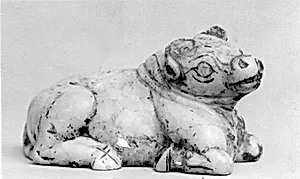
Medium
Marble
Dimensions
H. 1 3/4 in. (4.4 cm); W. 1 7/8 in. (4.8 cm); L. 3 3/4 in. (9.5 cm)
Classification
Sculpture
Culture & Period
China · Tang dynasty (618–907)
Department
Asian Art
Museum
Metropolitan Museum of Art, New York, NY
Credit
Fletcher Fund, 1933
Accession Number
33.88
Rights
Public Domain
Tags
Art Historical Context
Nestled in the Asian Art galleries of the Metropolitan Museum of, this petite *Reclining Bull*ivates with its serene pose and polished marble surface. Carved from marble during China's Tang dynasty (618–), the sculpture measures just 1¾ inches high, 1⅞ inches wide, and ¾ inches long—small enough to fit in the palm of your hand. Acquired through the Fletcher Fund in 3, it exemplifies the exquisite craftsmanship of an unknown artist from this vibrant era. The Tang dynasty marked a golden age of Chinese art and culture, blending influences from Central Asia through the Silk Road, resulting in lifelike sculptures that celebrated realism and vitality. Bulls held symbolic importance in Chinese society, often representing strength, fertility, and agricultural prosperity, key to the empire's prosperity. This reclining figure, with its relaxed form, may have served as a decorative ornament or tomb accompaniment, common in Tang burials to honor the afterlife. Crafted in marble—a durable, lustrous stone rarer for such intimate pieces than clay or bronze—the bull showcases masterful carving techniques that highlight anatomical details and a gentle curve to the body. Its compact elegance invites visitors to ponder the daily life and spiritual beliefs of Tang China, where even small artworks carried profound cultural weight.