
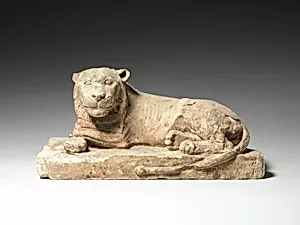
Reclining lion
Unknown Artist
332 B.C.–A.D. 364
Medium
Limestone
Dimensions
L. 45.6 cm (17 15/16 in.); W. 19.1 cm (7 1/2 in.); H. 22.6 cm (8 7/8 in.)
Classification
Statue, lion
Period
Ptolemaic or Roman Period
Department
Egyptian Art
Museum
Metropolitan Museum of Art, New York, NY
Credit
Rogers Fund, 1912
Accession Number
12.181.195
Rights
Public Domain
Tags
Art Historical Context
Behold the **Reclining Lion**, captivating limestone sculpture from Egypt's Ptolemaic or Roman (332 B.C.–A.D. 364). Carved with skillful precision, this compact figure measures 45.6 cm long, 19.1 cm wide, and 22.6 cm high, capturing a lion in a serene, majestic pose. Limestone, abundant in ancient Egypt, was a favored medium for its workability and durability, allowing artisans to render fine details like the beast's muscular form and relaxed posture. In the cosmopolitan world of Ptolemaic Egypt—ruled by Greek descendants of Alexander the Great before Roman dominance—lions symbolized raw power, protection, and divine kingship. Often linked to fierce deities like Sekhmet or pharaonic might, such sculptures likely served votive, funerary, or decorative purposes in temples, tombs, or elite homes. This unknown artist's naturalistic carving reflects the period's blend of traditional Egyptian motifs with Hellenistic influences, showcasing evolving sculptural techniques. Acquired through the Rogers Fund in 1912 and housed in the Metropolitan Museum of Art's Egyptian Art department, the **Reclining Lion** invites us to ponder the enduring allure of these noble creatures in ancient imagination. A testament to Egypt's artistic legacy, it reminds visitors of the lion's timeless role as guardian of the sacred.