
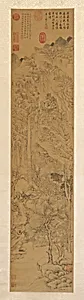
明 居節 石泉圖 軸|Recluse gazing at a waterfall
1559
Medium
Hanging scroll; ink on paper
Dimensions
43 1/2 x 9 3/4 in. (110.5 x 24.8 cm)
Classification
Paintings
Culture & Period
China · Ming dynasty (1368–1644)
Department
Asian Art
Museum
Metropolitan Museum of Art, New York, NY
Credit
John Stewart Kennedy Fund, 1913
Accession Number
13.220.116
Rights
Public Domain
Tags
Art Historical Context
In the serene world of Ming dynasty (1368–1644) literati painting, Ju Jie's *Recluse Gazing at a Waterfall (1559) captures the timeless allure of scholarly retreat. This hanging scroll, rendered in delicate ink on paper (43½ × 9¾ in.), depicts a lone figure contemplating a cascading waterfall amid rugged cliffs and misty pines. Created during the late Ming era—a period of cultural refinement and philosophical introspection—such works embodied the Daoist ideal of eremitic life, where artists withdrew from courtly bustle to commune with nature's sublime power. Ju Jie, a lesser-known but skilled practitioner of the scholar-amateur tradition, employs masterful ink techniques: fluid brushstrokes evoke the waterfall's dynamic flow, while subtle washes suggest mist and depth in the narrow vertical format ideal for contemplation. Hanging scrolls like this were unrolled for private meditation, fostering a personal dialogue between viewer and scene. Collected by the Metropolitan Museum of Art in 1913 via the John Stewart Kennedy Fund, it exemplifies how Ming artists prioritized expressive simplicity over ornate detail, influencing centuries of East Asian landscape art. Today, this piece invites us to pause, much like the recluse, and reflect on nature's quiet majesty amid life's rush.