
Red-Dyed Length of Linen
Unknown Artist
ca. 1981–1975 B.C.
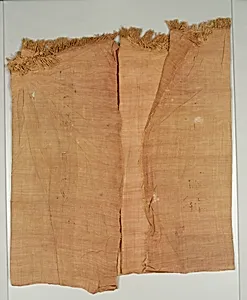
Medium
Linen, hematite
Dimensions
L. 245 cm (96 7/16 in); w. 80 cm (31 1/2 in)
Classification
Linen, sheet, inscribed, warp fringe, red, Wah
Period
Middle Kingdom
Department
Egyptian Art
Museum
Metropolitan Museum of Art, New York, NY
Credit
Rogers Fund and Edward S. Harkness Gift, 1920
Accession Number
20.3.203a
Rights
Public Domain
Art Historical Context
This striking *Red-Dyed Length ofinen* hails from Egypt's Middle Kingdom, specifically Dynasty 12 (ca. 1981–1975 B.C.), a golden age of stability and artistic refinement following the chaos of the First Intermediate Period. Acquired by the Metropolitan Museum of Art through the Rogers Fund and Edward S. Harkness Gift in 0, this substantial textile—measuring over 8 feet long and 2.5 feet wide—offers a rare glimpse into ancient Egyptian craftsmanship. Linen, woven from flax grown along the Nile, was a prized material symbolizing purity and status, often used for elite garments, mummy wrappings, and ritual cloths. The fabric's vivid red hue comes from hematite, a natural iron oxide pigment ground and applied as a mordant dye, showcasing sophisticated dyeing techniques that achieved colorfast results without synthetic chemicals. In a culture where color held deep symbolic meaning—red evoking life, vitality, and sometimes the god Seth—this piece highlights the Egyptians' mastery of natural resources. Though the artist remains unknown, the even weave and bold coloration reflect the period's emphasis on functional beauty and durability. Today, in the Met's Egyptian Art Department, this artifact transports visitors back millennia, underscoring how everyday textiles reveal profound insights into ancient daily life, trade, and technology. A testament to enduring artistry, it reminds us that even humble fabrics carried the weight of eternity.