
Reel
Unknown Artist
ca. 1295–1070 B.C.
Medium
Mud
Dimensions
h. 3 cm (1 3/16 in); diam. 3.2 cm (1 1/4 in)
Classification
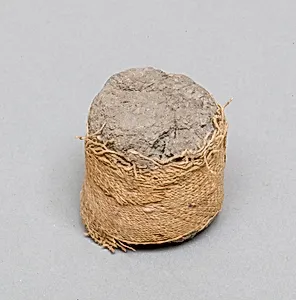
Reel, thread wrapped
Period
New Kingdom, Ramesside
Department
Egyptian Art
Museum
Metropolitan Museum of Art, New York, NY
Credit
Rogers Fund and Edward S. Harkness Gift, 1922
Accession Number
22.1.1205
Rights
Public Domain
Art Historical Context
Nestled in the Metropolitan Museum of Art's Egyptian Art collection, this modest "Reel" hails from Egypt's New Kingdom, specifically the Ramesside period Dynasties 19–20 (ca. 1295–1070 B.C.). Crafted from simple mud—likely Nile silt shaped and sun-dried—this tiny object measures just 3 cm high and 3.2 cm in diameter evoking the ingenuity of ancient everyday life during an era of imperial grandeur under pharaohs like Ramesses. Though its creator remains unknown, the reel's compact, cylindrical form suggests it functioned as a spindle whorl, essential for spinning flax into linen thread—a staple of Egyptian textiles used in everything from mummy wrappings to royal garments. Mud, an abundant and practical medium, highlights the resourcefulness of Ramesside artisans, who reserved precious materials like faience or stone for elite goods. This unassuming piece offers a window into the labor-intensive crafts that sustained Egypt's thriving economy and culture. Acquired through the Rogers Fund and Edward S. Harkness Gift in 1922, the Reel reminds us that monumental pyramids and temples were supported by such humble tools. It invites visitors to appreciate the unsung rhythms of ancient daily life, where even the smallest artifacts weave a rich tapestry of history.