
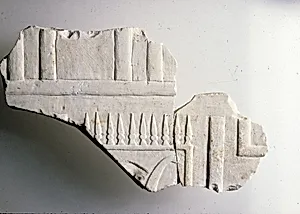
Relief fragment, tomb of Meketre
Unknown Artist
ca. 1981–1975 B.C.
Medium
Limestone, paint
Classification
Relief fragment, tomb of Meketre
Period
Middle Kingdom
Department
Egyptian Art
Museum
Metropolitan Museum of Art, New York, NY
Credit
Rogers Fund and Edward S. Harkness Gift, 1920
Accession Number
20.3.974
Rights
Public Domain
Art Historical Context
This exquisite relief fragment hails from the tomb of Meketre, a high-ranking official who served as vizier and treasurer during Egypt's Middle Kingdom, around 1981–1975 B.C. (Dynasty 12). Discovered near Thebes, it offers a glimpse into the elite funerary practices of ancient Egypt, where tomb walls were adorned with scenes ensuring the deceased's eternal sustenance and prosperity. Meketre's tomb is renowned for its vivid depictions of daily life, blending realism with ritual symbolism. Carved in limestone and vividly painted—though much color has faded over millennia—this fragment exemplifies Middle Kingdom artistry. Egyptian sculptors mastered sunk-relief techniques, where figures were incised into the stone for sharp definition under temple light, then highlighted with mineral-based pigments for lifelike vibrancy. Such works bridged the mundane and divine, portraying offerings, agriculture, or attendants to invoke ma'at (cosmic order) for the afterlife. Today, housed in the Metropolitan Museum of Art (Rogers Fund and Edward S. Harkness Gift, 1920), this piece illuminates the era's artistic revival after the First Intermediate Period, showcasing refined proportions and narrative clarity that influenced later dynasties. It invites us to ponder Meketre's world, where art preserved legacy amid the Nile's rhythms.