
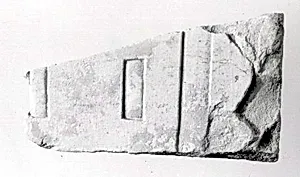
Relief fragment, tomb of Meketre
Unknown Artist
ca. 1981–1975 B.C.
Medium
Limestone, paint
Dimensions
H. 4.5 × W. 7.3 × D. 4 cm (1 3/4 × 2 7/8 × 1 9/16 in.)
Classification
Relief fragment, tomb of Meketre
Period
Middle Kingdom
Department
Egyptian Art
Museum
Metropolitan Museum of Art, New York, NY
Credit
Rogers Fund and Edward S. Harkness Gift, 1920
Accession Number
20.3.1005
Rights
Public Domain
Art Historical Context
This delicate limestone relief fragment hails from the tomb of Meketre, a prominent official in ancient Egypt's Middle Kingdom, dating to around 1981–1975 B.C. during Dynasty 12. Carved in low relief and traces of vibrant paint, it measures just 4.5 cm high, offering a glimpse into the refined artistry of Theban tomb decoration. Such fragments were part of larger wall scenes ensuring the deceased's eternal provisioning through depictions of daily life, offerings, and rituals. Crafted from limestone—a staple medium for its workability and availability—the piece exemplifies Middle Kingdom techniques: precise carving to create subtle depth, followed by vivid pigmentation in reds, blues, and yellows that brought scenes to life. This period marked a renaissance in Egyptian art, blending Old Kingdom formality with more naturalistic expressions, reflecting prosperity under pharaohs like Senusret I. Housed in the Metropolitan Museum of Art thanks to the Rogers Fund and Edward S. Harkness Gift in 1920, this artifact underscores the cultural reverence for the afterlife. Though small, it invites us to ponder Meketre's world, where art bridged the mortal and divine, preserving legacy amid the Nile's timeless flow.