
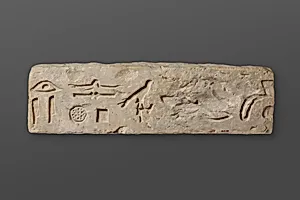
Relief fragment, tomb of Mereri (?)
Unknown Artist
ca. 2100–2090 B.C.
Medium
Limestone
Dimensions
H. 12 × W. 43.6 × D. 5.1 cm (4 3/4 × 17 3/16 × 2 in.)
Classification
Relief fragment, tomb of Mereri (?)
Period
Old Kingdom–First Intermediate Period
Department
Egyptian Art
Museum
Metropolitan Museum of Art, New York, NY
Credit
Gift of Egypt Exploration Fund, 1898
Accession Number
98.4.69
Rights
Public Domain
Tags
Art Historical Context
This delicate limestone relief fragment, likely from the tomb of Mer, dates to around 2100–2090 B.C., bridging the late Old Kingdom and the turbulent First Intermediate Period (Dyn 8–11). Carved during a time of political fragmentation in ancient Egypt, such tomb decorations served vital religious purposes: ensuring the deceased's eternal sustenance through depicted offerings, daily activities, and protective spells. The question mark beside Mereri's name hints at the challenges of identifying owners from fragmented remains, a common puzzle for Egyptologists. Expertly incised into the soft limestone—a favored medium for its workability and abundance—the relief features finely carved hieroglyphs, hallmarks of Egyptian artistry. These inscriptions, rendered in sunk relief technique, would have been vividly painted in antiquity, bringing scenes to life with vibrant reds, blues, and golds now faded by millennia. At just 12 cm high and 43.6 cm wide, the fragment captures the precision of Old Kingdom traditions persisting amid change, emphasizing order (ma'at) even in unstable times. Acquired by the Metropolitan Museum of Art through the Egypt Exploration Fund in 1898, this piece offers a intimate glimpse into elite burial practices, reminding us how ancient Egyptians blurred art, writing, and immortality in their quest for the afterlife.