
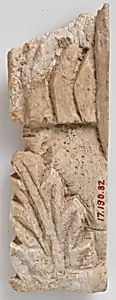
Relief Fragment with Acanthas Leaf Design
Unknown Artist
6th–7th century
Medium
Ivory
Dimensions
Overall: 2 3/4 x 15/16 x 5/16 in. (7 x 2.4 x 0.8 cm)
Classification
Ivories
Culture
Coptic
Department
Medieval Art
Museum
Metropolitan Museum of Art, New York, NY
Credit
Gift of J. Pierpont Morgan, 1917
Accession Number
17.190.82
Rights
Public Domain
Tags
Art Historical Context
This delicate ivory relief fragment, dating to the 6th–7th century, hails from Coptic Egypt—a vibrant Christian culture that blended ancient Egyptian traditions with Greco-Roman and Byzantine influences Carved in low relief, it features an intricate acanthus leaf design, a classical motif symbolizing eternal life and paradise. At just 2 3/4 x 15/16 x 0.8 cm, this tiny piece was likely part of a larger, such as a book cover, pyxis (box), or liturgical item, showcasing the exquisite craftsmanship of Coptic ivories prized for their portability and luxury. Coptic artists excelled in ivory carving, using the smooth, tactile medium to create rhythmic, organic patterns that evoked nature's abundance. The acanthus leaf, with its scrolling tendrils, bridges pagan antiquity and early Christian art, appearing on church furnishings across the Mediterranean. This fragment exemplifies how Coptic workshops in monastic centers like those near Fayum produced works for both local worship and elite export. A generous gift from J. Pierpont Morgan in 1917, it now graces the Metropolitan Museum of Art's Medieval Art collection, offering a window into a pivotal era when Egypt's artistic heritage flourished amid cultural transitions.