
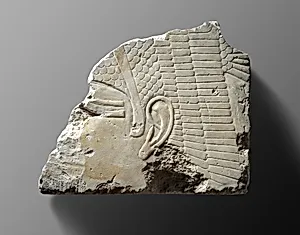
Relief fragment with the head of a goddess
Unknown Artist
ca. 2353–2152 B.C.
Medium
Limestone, paint
Dimensions
H. 42 cm (16 9/16 in.); W. 51 cm (20 1/16 in.)
Classification
Relief, head of a goddess
Period
Old Kingdom
Department
Egyptian Art
Museum
Metropolitan Museum of Art, New York, NY
Credit
Rogers Fund, 1908
Accession Number
08.200.56
Rights
Public Domain
Tags
Art Historical Context
This exquisite limestone relief fragment, dating to Egypt's Old Kingdom (ca 2353–2152 B.C.) during Dynasties 5–6, captures the serene head of a goddess, likely from a larger temple or tomb wall. Crafted from fine-grained limestone and once vividly painted, it measures 42 cm high by 51 cm wide, the monumental scale of ancient Egyptian artistry. Acquired by the Metropolitan Museum of Art through the Rogers Fund in 8, it offers a glimpse into the pyramid-building era, when pharaohs like those of Dynasty 5 constructed vast solar temples honoring gods like Ra. The low-relief carving technique—incising the figure slightly from the stone background—created a subtle three-dimensional effect that caught the play of light in torchlit interiors. Traces of original paint would have brought the goddess's features to life, with bold colors symbolizing her divine vitality and eternal presence. Such reliefs adorned sacred spaces to invoke protection and prosperity for the afterlife, reflecting the Egyptians' deep integration of art, religion, and cosmology. As a fragment, it hints at grander narratives of divine benevolence, underscoring the Old Kingdom's cultural emphasis on harmony between gods, kings, and the cosmos. Visitors can marvel at how this modest survivor preserves the awe-inspiring legacy of ancient reverence.