
Relief panel
Unknown Artist
ca. 883–859 BCE
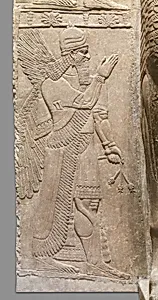
Medium
Gypsum alabaster
Dimensions
52 1/4 x 27 x 3 1/2 in. (132.7 x 68.6 x 8.9 cm)
Classification
Stone-Reliefs
Culture & Period
Assyrian · Neo-Assyrian
Department
Ancient Near Eastern Art
Museum
Metropolitan Museum of Art, New York, NY
Credit
Gift of John D. Rockefeller Jr., 1932
Accession Number
32.143.9
Rights
Public Domain
Art Historical Context
This striking gypsum alabaster relief panel, to around 883–859 BCE, hails from the Neo-Assyrian period, a time when the Assyrian Empire dominated the ancient Near East through military might and architectural splendor. Crafted by an unknown artist, it exemplifies the monumental stone reliefs that adorned the palaces of Assyrian kings, such as those Nimrud. These carvings served as powerful propaganda, glorifying royal conquests, hunts, and divine favor to awe visitors and assert imperial dominance. Carved in low relief from durable yet workable gypsum alabaster—a favored medium for its fine grain and ability to capture intricate details—the panel measures an impressive 52¼ x 27 x 3½ inches. Assyrian sculptors mastered this technique, incising figures with precise lines and subtle modeling to create dynamic scenes that seem to emerge from the stone. Such works highlight the empire's artistic sophistication, blending narrative storytelling with symbolic motifs rooted in Mesopotamian traditions. A generous gift to the Metropolitan Museum of Art from John D. Rockefeller Jr. in 1932, this panel invites us to glimpse the grandeur of a vanished world, where art was both decoration and declaration of power. (198 words)