
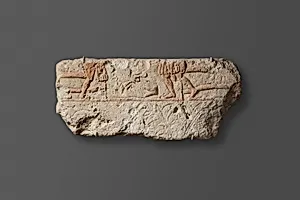
Relief with a construction scene
Unknown Artist
ca. 1353–1336 B.C.
Medium
Limestone, paint (mostly modern)
Dimensions
h. 22.8 cm (9 in); w. 33 cm (13 in)
Classification
Talatat, construction scene
Period
New Kingdom, Amarna Period
Department
Egyptian Art
Museum
Metropolitan Museum of Art, New York, NY
Credit
Purchase, Lila Acheson Wallace Gift and Louis V. Bell Fund, 1991
Accession Number
1991.240.12
Rights
Public Domain
Art Historical Context
Step into the vibrant world of ancient Egypt with this captivating limestone relief, titled *Relief with a Construction Scene*. Dating to around 1353–1336 B.C., it hails from the New Kingdom's Amarna Period during Dynasty 18—a revolutionary era under Pharaoh Akhenaten, when Egypt's capital briefly shifted to the city of Amarna. This small-scale artwork (9 x 13 inches) vividly captures everyday laborers at work, likely building temples or structures dedicated to the sun god Aten, reflecting the period's emphasis on royal projects and daily life. Crafted in low-relief limestone, a favored medium for its durability and fine carving potential, the scene showcases the Amarna style's distinctive naturalism: elongated figures, expressive poses, and dynamic compositions that broke from rigid traditions. Traces of paint—mostly modern restorations—hint at the original colorful vibrancy that brought these workers to life, evoking the hustle of ancient construction sites with tools like chisels and levers. Acquired by the Metropolitan Museum of Art in 1991 through generous gifts, this relief offers a rare glimpse into Amarna's artistic innovation and societal snapshot. It reminds us how pharaohs glorified labor in service to their god, blending propaganda with profound human detail in one intimate slab of stone.